
If you have a CAT 99.4 sitting in your inbox, an IIM Indore shortlist letter on the desk, and a quiet question running in the background about whether you can actually survive a two-year residential MBA on a hilltop in Madhya Pradesh, this post is for you. We will walk through what the IIM Indore campus is really like once you stop reading brochures: the academic rhythm, the hostel block, the IRIS week, and the rural fortnight that most aspirants never plan for. The named profile we will follow is Aarav, a 24-year-old Pune software engineer with three years at a mid-tier IT services firm, because that is the modal Indore PGP entrant Pegasus Global Consultants sees year after year.
The first thing the IIM Indore campus changes is your clock
The PGP at IIM Indore is a two-year, fully residential programme spread over six terms, with an eight-week summer internship sandwiched between Year 1 and Year 2 and an academic year that runs June or July through March or April, as the institute spells out on its official PGP page. The first thing the timetable does to you is reset your clock. Classes begin at 8:45 AM with strict expectations of punctuality. Sessions are 75 minutes long, punctuated by 15-minute tea breaks, and they fill most of the working day before pre-reads, group meetings, and case prep eat into the evening. Aarav, who spent three years rolling into a Pune office between 10:30 and 11, will spend his first month at Indore catching up on sleep on Sundays.
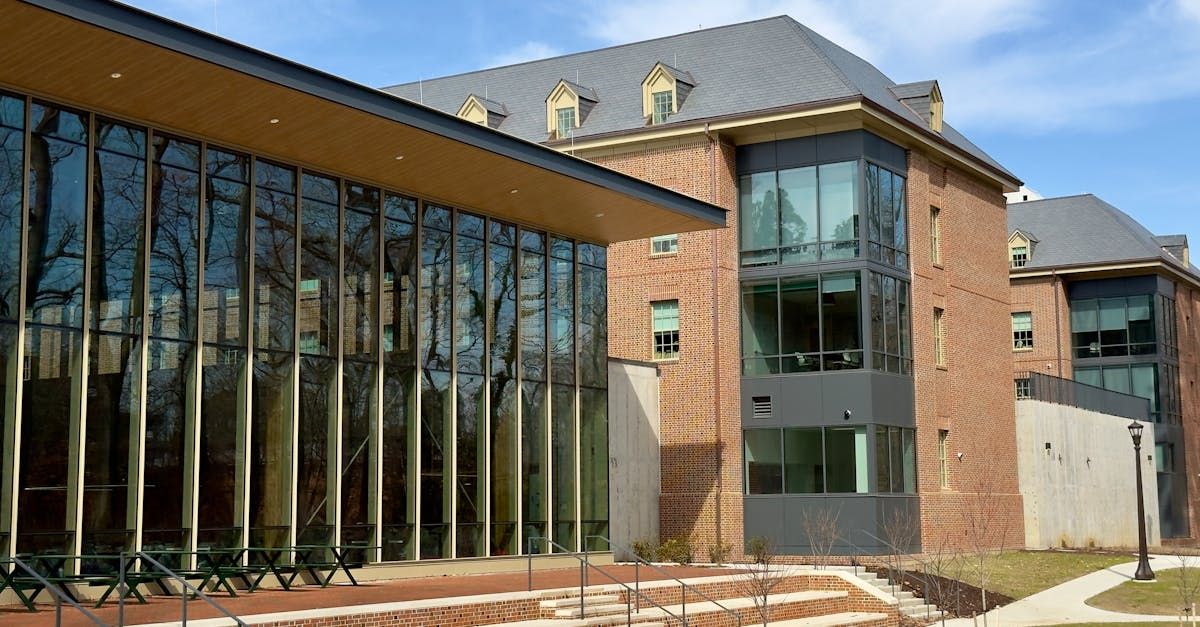
The campus itself sits on a 193-acre hilltop on the outskirts of Indore, with academic blocks, hostels, the library, faculty quarters, and recreational facilities arranged so you rarely need to leave it during the week. The institute holds Triple Crown accreditation, AACSB, AMBA, and EQUIS, and the Life at IIM Indore page describes the campus as a small, self-contained ecosystem. In practical terms this means your weekday will move between hostel, classroom, library, mess, and lawn, with the city visited mostly for weekend errands.
How the academic load is actually built
Two structural choices define the IIM Indore academic experience for any Indian PGP entrant, and most candidates miss both of them while obsessing over the CAT cutoff. The first is the credit system. Students take a minimum of 12 and a maximum of 24 credits per term. A four-credit course expects roughly 100 hours of work over the term, of which only 25 are in classroom seats. The remaining 75 are pre-reads, case prep, assignments, and group submissions. Multiply that across five or six concurrent courses and Year 1 feels relentless by design.
The second structural choice is the matrix in Year 2. IIM Indore's PGP-II uses a unique structure where participants take 10% of credits in Industry Vertical Courses and 10% in Functional Area Courses on top of general management electives. Translation: you are not just picking finance or marketing electives, you are forced to anchor part of your learning to a specific industry. For Aarav, who wants to exit IT services and move into product management at a consumer internet firm, that means picking electives that pair Marketing Analytics with a Consumer Goods vertical, not just stacking three Strategy electives because they are easier to score.
Pedagogy across both years is dominated by the case method, supported by lectures, simulations, group projects, and guest sessions, again per the official curriculum description. Two consequences follow. One, your reading load is genuinely heavy, four to six cases a week is a common rhythm at the IIMs. Two, class participation is graded, sometimes for 20 to 30 percent of a course's marks, so silent students with strong written work still bleed grade points.
The rural fortnight and the IRIS week, the two academic events nobody warns you about
Two parts of the IIM Indore academic experience surprise every new entrant. The first is the Rural Engagement Programme, which the institute treats as a graduation requirement. It places PGP-I students in villages across Madhya Pradesh to understand the social and economic context inside which Indian businesses operate. For Aarav, who has spent his entire adult life in metros and a Pune SEZ, two weeks of living and working in a village is the closest the curriculum will push him to genuine field discomfort. It is also one of the few experiences that almost always lands as a real story in a placement interview.
The second is IRIS, the annual cultural and management festival. The IRIS festival page lists events ranging from Bazinga, a party zone, to Pratibimb, a dramatics event, and Jagriti, a social sensitivity initiative that extends festivities to rural school students. IRIS runs for several days, brings hundreds of outside-campus participants in, and effectively shuts down academic work for that week. For applicants who imagine the IIM experience as pure case-rooms, IRIS is the corrective: a non-trivial part of your two years is spent organising or competing at IRIS and Utsaha, the rural marketing fair.
If you are an IT services engineer like Aarav, three years in, here is how the rhythm will hit you
Term 1 to 3 will feel like a 70-hour week with a 100-hour week superimposed on top. Group meetings run past midnight, hostel blocks have lights on at 2 AM, and the WhatsApp groups never sleep. The Quora threads about PGP life at the IIM Indore Mumbai campus are slightly skewed toward the working executive cohort, but the time-budget complaints are identical at the Indore main campus. The first 90 days are the hardest because you are simultaneously learning accounting, statistics, micro, and quantitative methods with classmates who include CAs, chartered finance professionals, and IIT seniors who have done their math in their sleep.
By Term 3 the rhythm stabilises. By the time the summer internship comes around, you can stitch a case in an hour. The internship itself is the single largest career signal of the first year, since most consulting and finance pre-placement offers are sourced through it. The IIM Indore 2025 Placement Report and external trackers like Shiksha's IIM Indore placement page record an average PGP package of around INR 29.57 LPA for the 2025 batch, with 100 percent placement and over 225 recruiters on campus. For an IT services entrant, this is the lever: a strong summer at a tier-one consulting or product company sets the entire Year 2 elective strategy.
Year 2 in turn is more elective-heavy and more flexible. The matrix structure lets Aarav narrow into product management, e-commerce, and consumer analytics. Recruitment is heavier in Terms 4 and 5, and Term 6 is partly for international exchange, with IIM Indore listing exchange tie-ups with multiple international business schools.
If you are an IPMAT entrant from the Class 12 pathway, the experience is structurally different
The IIM Indore campus is also home to the Integrated Programme in Management, popularly tracked as the IIM Indore IPMAT route. IPM students enter directly after Class 12, complete a five-year integrated curriculum, and graduate with the same PGP credential at the end. The first three years lean more academic and undergraduate in feel, the last two converge with the regular PGP. If you are a 17-year-old reading this post after writing IPMAT 2026, two practical implications matter.
First, your peer group is broader than the standard PGP cohort. You will study alongside CAs, IIT alumni, and consultants from Mumbai, but in your IPM block you will also live with people only a year out of school. The hostel and mess routine, described in the IIM Indore Hostel Manual updated in July 2025, is shared, with single and twin-occupancy rooms, 24x7 Wi-Fi, common rooms, a gym, and a managed mess.
Second, your career compounding is longer. By the time you reach Year 4 and 5, you have already done multiple academic internships and clubs, which means recruiters see five years of compounded campus signal, not two. This is why IPMAT-route students are often disproportionately represented in early offers for consulting and finance roles.
A word about the IIM Indore Mumbai campus and what it is not
A search for "IIM Indore Mumbai" frequently lands aspirants on the IIM Indore Mumbai sub-campus, which runs the Post Graduate Programme in Management for Working Executives, or PGPMX, as the PGPMX programme page describes. This is not the same as the two-year residential PGP. PGPMX is a part-time executive MBA aimed at working professionals in Mumbai, with weekend classes and a different admission process built around work experience and Aptitude Test scores. If you are looking for the residential two-year experience on a hilltop with hostel life, IRIS week, and the Rural Engagement Programme, you want the main Indore campus, not the Mumbai PGPMX.
What this means for Indian applicants
If you are picking between the IIM Indore PGP and a one-year global programme, the right framing is not just fees or rankings. The Indore campus gives you two full academic years, a residential cohort of roughly 500 to 600 PGP students plus IPM seniors, an enforced rural exposure, and a placement engine that the 2025 IIM Indore placement report shows is now consistently above INR 27 to 29 LPA at the median. Trade-off: you give up early salary, lose two years of work compounding, and live in a small town for most of those two years.
That last constraint matters. Indore is a clean, fast-growing tier-2 city, but it is not Mumbai, Bengaluru, or Delhi. Your social life rotates around campus and the city's better restaurants on weekends, not a metro nightlife. For most Indian applicants who entered the workforce in IT services, consulting, or banking, that is a feature, not a bug, because it forces depth of cohort bonding and reduces distractions during the most academically intense 24 months of their career.
If you are halfway through this decision, two next steps usually help. First, a 60-minute profile evaluation to stress-test whether IIM Indore is your right risk-adjusted choice given your CAT or GMAT, work experience, and post-MBA goals. Second, a read of our IIM cluster posts on the Indian MBA versus a global MBA decision and the IIM Indore selection criteria so you know the shortlist math before you start dreaming of the hilltop.
Common questions applicants are asking
Is the IIM Indore campus actually on a hill?
Yes. The main IIM Indore campus is built on a 193-acre hilltop site in Pithampur Road, about 25 to 30 minutes from central Indore by road. Academic blocks, hostels, faculty quarters, library, and recreation areas are spread across the site. The hilltop layout is one of the features the Life at IIM Indore page markets, and most current and former students cite the green campus as a real differentiator from urban-core IIM campuses.
How rigorous is the IIM Indore academic schedule compared to IIM Ahmedabad or IIM Bangalore?
Comparable. All three follow a six-term, two-year PGP structure with heavy case method, group submissions, and graded class participation. IIM Indore differentiates itself with the mandatory Rural Engagement Programme and the Year 2 matrix structure of vertical-plus-functional electives. Day-to-day workload, roughly 70 to 100 hours a week through Year 1, is similar across the older IIMs.
What is the difference between IIM Indore PGP and the IIM Indore IPMAT or IPM programme?
PGP is the standard two-year MBA for graduates with or without work experience, entered via CAT and GD-PI. IPM, accessed via IPMAT after Class 12, is a five-year integrated programme that ends in the same PGP credential. The first three IPM years carry an undergraduate flavour; the last two converge with regular PGP. Both share the IIM Indore campus, hostels, IRIS, and most clubs.
Is the IIM Indore Mumbai campus the same as the main Indore campus?
No. The IIM Indore Mumbai campus runs the PGPMX, a weekend executive MBA aimed at working professionals in Mumbai. It is part-time, has a different admission process, and does not give you the two-year residential PGP experience. If campus life, hostel, IRIS, and the rural fortnight matter to you, the main Indore campus is the only route.
What do placements at IIM Indore look like in 2026 if you are a non-engineer?
Strong but profile-dependent. The 2025 placement report shows 100 percent placements with around 49 percent of the batch going into consulting and finance, and the average PGP package around INR 29.57 LPA. Non-engineers, including CAs and humanities undergraduates, are well represented and often score competitive offers in consulting, banking, and General Management roles, but the strength of your work experience and class participation tends to matter as much as your undergraduate stream.
Related reading
- IIM vs Foreign MBA in 2026: Should I Pick an IIM A/B/C or a Global Programme?
- IIM Udaipur CAP Exit 2026: What CAT 2025 Indian Applicants Should Do Now
- IIM Ahmedabad Admission Criteria: What They Actually Look For Beyond CAT Score
- How to Get Into ISB Hyderabad: The Admissions Playbook for Indian Applicants
- Service: Profile Evaluation at WePegasus
- Service: MBA & MIM Consulting at WePegasus
- IIM Indore Placement 2026: The Real Outcome for the Class You Want to Join
- ISB vs IIM Calcutta for Finance Track: An Honest Comparison for Indian Applicants
- MIM Courses: India vs Abroad in 2026 for Indian Final-Year Students