

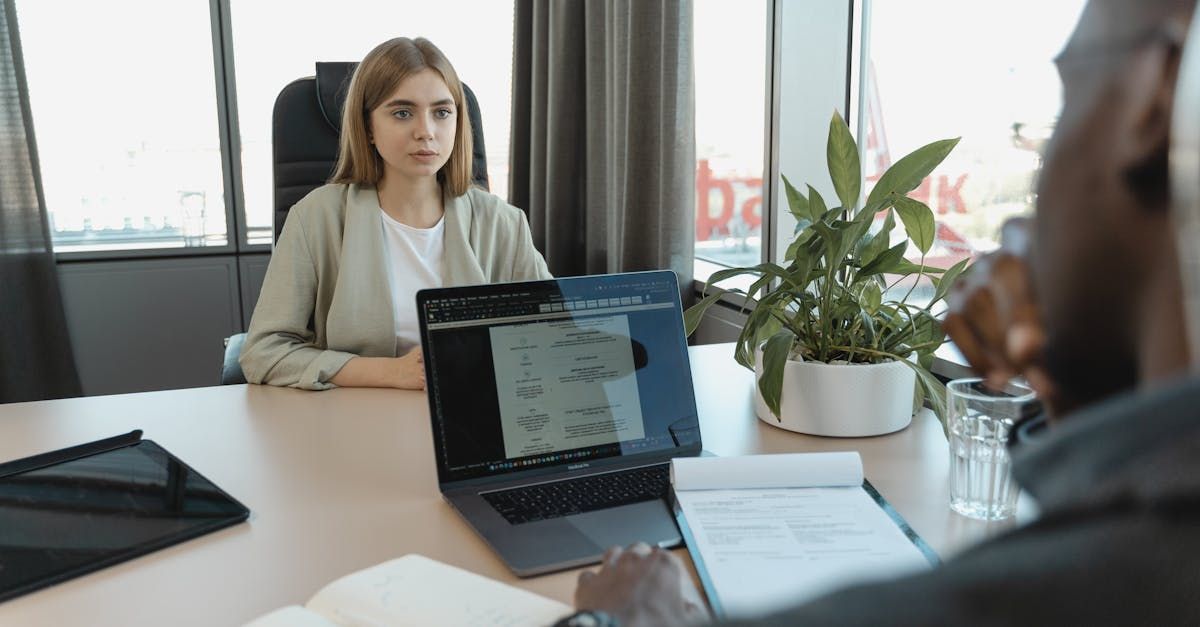
If you are an Indian student with a confirmed F-1 visa interview at the Mumbai or Delhi consulate next month, the Reddit thread you opened at midnight is right to make you nervous. The US State Department issued a global cable on April 28, 2026 adding two new questions to every nonimmigrant visa interview, and consular officers must deny the visa on the spot if you answer "yes" to either. This post breaks down the us visa interview new questions, what consular officers are actually trained to flag, and how an F-1 applicant from India should prepare.
The two new questions, in the State Department's exact wording
A diplomatic cable signed April 28 directs consular officers to add two questions to every nonimmigrant visa interview, including B-1, B-2, F, J, H, L, and O categories (Newsweek, April 28, 2026). The questions are: "Have you experienced harm or mistreatment in your country of nationality or last habitual residence?" and "Do you fear harm or mistreatment in returning there?"
If you answer "yes" to either, the cable instructs the officer to deny the visa under section 214(b) of the Immigration and Nationality Act, the same provision used for nonimmigrant intent failures. Two large immigration practices, Fragomen and VisaHQ, have published advisories confirming the cable's scope. The Washington Post, which broke the story, called it the "no-fear declaration" rule.
Why the State Department added these questions now
The directive sits inside a broader 2025 executive order the Trump administration framed as anti-asylum-abuse policy. The official rationale, repeated in the cable's preamble: too many people enter the US on tourist or student visas, then file asylum claims after arrival, clogging immigration courts. Moving the screening to the consular interview pushes the rejection upstream, before the person reaches US soil.
The data the policy is responding to is real. F-1 student visa refusal rates for Indian applicants jumped from 36 percent in 2023 to 61 percent in 2025, according to State Department issuance numbers compiled by Inside Higher Ed. Indian student visa issuance dropped by roughly a third in summer 2025 alone, per ICEF Monitor. The new questions are not the cause of that decline; they are the formalisation of a screening posture that was already filtering out Indian applicants.
What is new is that an ambiguous answer is now actionable. If you hesitate, ask the officer to repeat the question, or qualify your answer with context, that hesitation can be coded as a yes.
If you are an Indian F-1 applicant from a state with active conflict or protest
Three categories of Indian applicants need to think very carefully about how they answer.
Manipur, parts of Jammu and Kashmir, and pockets of Chhattisgarh have had documented violence in 2024 and 2025, including ethnic conflict, internet shutdowns, and named civilian incidents covered by international wire services. If you are from one of these regions and you read the question literally, a "yes" will get you denied. If you answer "no" but your DS-160 or social media history shows you have publicly discussed the violence, the inconsistency itself becomes a red flag.
Religious minority applicants, particularly Christians and Muslims in some northern states, may have written about discrimination in school essays, college admissions essays, or Twitter and Instagram posts. The expanded social media screening regime (Boundless) means any of that surfaces during the consular interview prep.
Applicants with active Indian court cases, pending FIRs, or family members involved in political party work are the third category. None of these are disqualifying on their own, but the new questions create a path where a yes-or-no answer can be cross-referenced against the DS-160 disclosures.
The honest read for Indian applicants in these categories is that the no-fear regime makes the F-1 substantially harder for them than it was 12 months ago.
If you are a standard Indian Tier-1 IT services or engineering applicant
Most Indian F-1 applicants, the engineer from Pune with a 760 GMAT going to Carnegie Mellon's MS or Booth's MBA, fall into a different bucket. The two new questions are unlikely to trip you up if you prepare normally. The honest answer in your case is "no" to both, because returning to India after the degree is your default plan.
The risk for this profile is different. The two-question screen runs alongside expanded social media vetting that started in summer 2025. Consular officers now check the social handles you disclose on the DS-160 against your stated reason for travel, your funding source, and your post-graduation plans. A Twitter feed that reposts US-political content while your DS-160 says you plan to return to India will read as inconsistent. An Instagram with photos of friends at US universities tagged in 2024 will trigger questions about prior intent.
The fix is not to scrub or deactivate accounts. The State Department's June 2025 cable explicitly says applicants should set profiles to public and leave them public until the visa is issued. Hidden or deactivated accounts are themselves a red flag. The fix is to make sure what is public is consistent with the DS-160 you filed.
What this means for Indian applicants
Three operational changes belong on every F-1 prep checklist starting May 2026.
First, rehearse the two new questions out loud, in English, with a mock interviewer. The literal answer for almost every Indian applicant is "no, I have not experienced harm" and "no, I do not fear returning". Saying those words in a calm voice without hedging is a skill, not a default.
Second, audit your social media for the last five years. The DS-160 already requires you to disclose every handle. Make sure the public face of those accounts is consistent with the reason for travel you state on the form.
Third, think hard about the timing. If you have a deferred admission, an extended OPT plan, or a parent on H-1B, the new screening environment changes the risk calculus. A WePegasus profile evaluation covers F-1 timing and risk in a way generic study-abroad consultants do not. If you need help with the visa interview itself, our interview prep sessions include scripted rehearsals for the new no-fear questions.
Common questions Indian applicants are asking this week
Will saying "yes" to either question always result in a denial?
The cable instructs consular officers to deny under section 214(b) of the Immigration and Nationality Act, with no waiver path inside the consulate. The denial is not a permanent ban: you can apply again at a later date and answer differently, but the prior interview record stays on the State Department's file. Any future "no" answer that contradicts an earlier "yes" is a red flag for inconsistency, which the same officer or a different one can cite at the next interview. The practical implication is that the first answer you give is the answer you live with for that visa application cycle.
Should I delete old social media posts about politics or human rights?
No, and this is consistent advice from every credible US immigration practice that has weighed in. Deleting in proximity to a visa interview is itself a flag that consular officers are trained to look for. The expanded social media review checks for both content and pattern of activity. Deleting a year of posts the week before an interview reads worse than leaving honest content public. If you are worried about specific posts, talk to a US immigration attorney before the interview, not after. The lawyer can help you assess whether to address a post directly during the interview or stay silent.
Does this affect H-1B and OPT applicants?
The cable applies to every nonimmigrant visa category, so H-1B and dependent visas (H-4, F-2) are covered. The first time the questions hit you is at the consular interview, which means H-1B holders renewing stamps in India during a vacation are squarely in scope. STEM OPT itself does not require a fresh visa interview while you remain in the US, but an OPT participant who travels internationally and re-enters will face the questions on re-entry through the consulate or the port of entry, depending on circumstance. Plan vacations accordingly until the policy stabilises.
Are J-1 exchange and university-funded scholars affected?
Yes. J-1 is explicitly named in the April 28 cable, alongside B-1, B-2, F, H, L, O, and P categories. University-sponsored research scholars, exchange participants, and short-term programme attendees face the same two questions. The implication for Indian academics on Fulbright or similar programmes is that the social media review and the no-fear screening apply identically to your application as they would to a private F-1 student. There is no programme-level exemption. If your J-1 sponsor (the host university or research lab) has not issued guidance yet, check with the international scholar office before the scheduled interview.
Related reading
- What Kind of Questions Should I Actually Expect in an MBA Interview?
- Self Introduction in MBA Interview: The 90-Second Answer Structure That Lands
- Strength and Weakness in MBA Interview: Honest Answers That Do Not Sound Rehearsed
- My Resume Bullets All Start With 'Managed' and 'Led'. How Do I Rewrite Them?
- Service: Interview Prep Service
- Service: Profile Evaluation at WePegasus
- F-1 Visa Interview Got Two New Questions on April 28: How Indian MBA and MS Applicants Should Prepare
- H-1B Interview Slots Blocked in India Until 2027: What Post-MBA Indians Need to Know
- F-1 Visa Slots in India for Fall 2026: What April's Reopening Means