

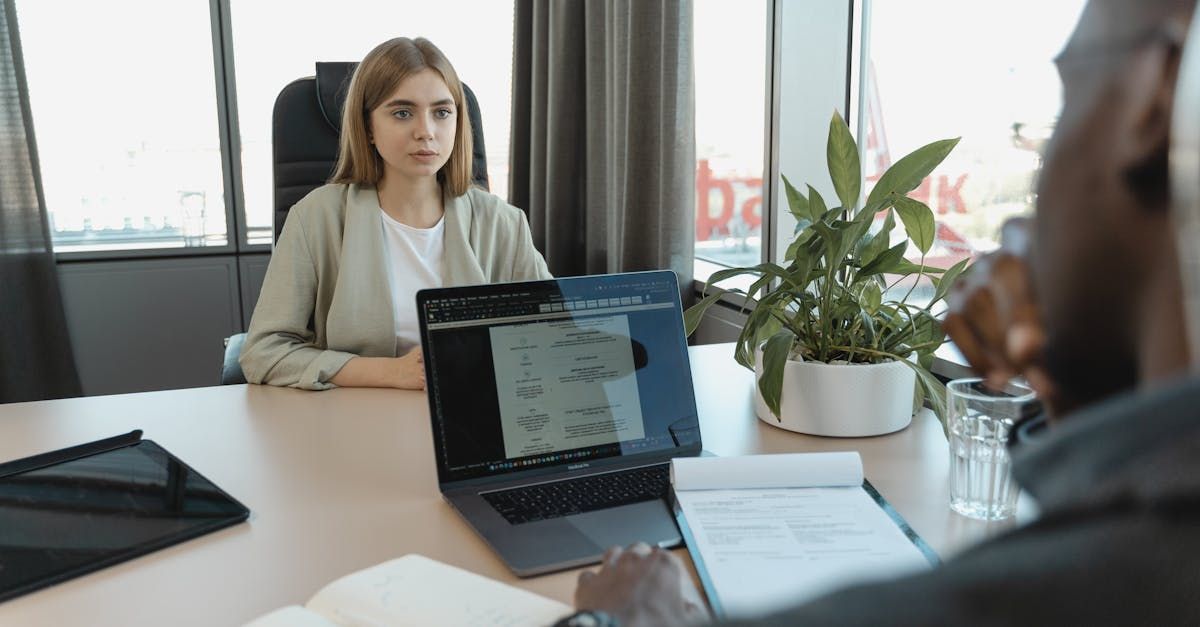
If you are rehearsing your self introduction for an MBA interview at 11 p.m., seventeen days before your Wharton TBD or ISB invite, and the answer keeps coming out either too long or too obviously memorised, you are in the right post. The first ninety seconds is the only stretch of the conversation where you fully script what gets said, and most Indian applicants quietly waste it on a chronological resume recap. This is for the IT services engineer with four years at TCS, the CA pivoting from audit to consulting, and the fresher walking into the ISB Early Entry interview, who all need a self introduction that earns the next question rather than closes the room.
Why does the first 90 seconds matter more than any other answer?
The introduction is the only answer in an MBA interview where the question is predictable and the time is yours. Wharton's official MBA interview process page describes the Team-Based Discussion as a 35-minute group exercise that opens with each applicant giving a one-minute pitch in alphabetical order, before any team discussion begins. ISB's blind interview, which Indian applicants face on Zoom or at the Hyderabad campus, runs 30 to 40 minutes and almost always opens with a "walk me through your journey" prompt, per the AdmitStreet 2025 ISB interview guide. INSEAD alumni interviewers, whose conversations can stretch 60 to 90 minutes, keep cycling back to the introduction until yours has done the work for them.
What this means: the first ninety seconds is not a warm-up. It sets the agenda for the rest of the conversation. If your self introduction lands a single specific hook, the interviewer follows that thread; if it doesn't, they reach for their default question list and you spend the next thirty minutes answering questions you didn't plan for.
What is the right structure for a 90-second MBA interview self introduction?
The structure that works across Wharton TBD, ISB, INSEAD, LBS, and HBS is not the INSPIRE acronym or any other admissions-firm template. It is four beats, in this order, totalling roughly 200 to 230 spoken words at a calm, unrushed pace.
Beat 1 - The hook (10 to 15 seconds). One sentence that places you in the room with a concrete handle. Not "I'm Rohan, a software engineer". Try "I'm Rohan; I have spent the last three years rewriting the credit-decisioning engine that approves about 40 percent of HDFC Bank's two-wheeler loans." A handle is a noun the interviewer can ask the next question about.
Beat 2 - The professional spine (25 to 30 seconds). Two sentences naming where you are now and the one professional thread that connects your last two roles. Not a recital of every employer. The thread should already be hinting at your post-MBA goal.
Beat 3 - The inflection moment (25 to 30 seconds). One specific story or decision that explains why you are sitting in this interview today. The MBA Crystal Ball guide on answering "tell me about yourself" calls this the moment where you stop being a CV and start being a person. The inflection is usually a project that exposed a skill gap, a failure that changed your goal, or a window into a different career your current job will not give you.
Beat 4 - The forward arrow (15 to 20 seconds). One sentence on what you want next, said in a way that makes the school's value obvious without quoting the brochure. End on the school, not on yourself.
Total: roughly 90 seconds. Roughly 220 words. The interviewer should still have follow-up energy when you stop.
If you are an IT services engineer with 4 to 5 years at a tier-1 IT firm
The trap for Indian applicants from TCS, Infosys, Wipro, Cognizant, and similar firms is sounding interchangeable. Three out of four self introductions we hear in mock interviews open with the word "responsible" and end with "I want to learn business strategy". Both are dead.
A working version, condensed:
"I'm Karthik. I lead a four-person platform team at Infosys that owns the data ingestion layer for a US insurer's claims platform; about 18 million claims a year flow through what I build. I came into Infosys from NIT Surathkal in 2021 expecting to write code; what I have actually spent the last two years doing is sitting in calls with the client's underwriting head, learning that the bottleneck on faster claim payouts is not engineering speed, it is how the underwriting and tech teams disagree on what 'fraud risk' even means. The more useful I have been in those calls, the less I have wanted to stay on the technical side of that conversation. ISB's structured general management programme is how I want to move to the underwriting side, in India, building product at a digital insurer like ACKO or Go Digit."
That answer earns these next questions, in this order, almost every time: what did the underwriting head specifically say, why ACKO and not Go Digit, what stopped you from moving teams inside Infosys. You wanted those questions.
If you are a CA, CFA, or finance professional pivoting from audit to consulting
CAs are penalised for sounding overly technical and Big Four CAs are doubly penalised for sounding like a service line. The hook should be a number that is not your CGPA or your AIR.
"I'm Aarushi, a chartered accountant; I qualified in the November 2023 batch and currently lead transaction-services diligence on mid-market deals at one of the Big Four in Mumbai, ticket sizes between 200 and 800 crore. The reason I am applying is the deal I worked on this past March, a packaging company in Pune where the diligence flagged the right red flags but the buyer's strategy team got the integration plan wrong, and I watched a 600-crore investment lose value inside the first six months because nobody in the room owned both the financial and operational view. The MBA I want is the one that lets me sit on that side of the table next time. INSEAD's lateral consulting recruiting and the year-one Operations and Strategy core are why this programme, not a finance MMS."
Note what is missing: the number 23 (rank), the firm name as the lead identity, and the phrase "global exposure".
If you are a fresher applying to ISB Early Entry, YLP, or HBS 2+2
Freshers face an inverted problem. You do not have a 600-crore deal to point to, and admissions committees know that. The hook moves to academics or a research project, but only if you make it concrete, not if you list awards. The ISB interview guide on AdmitStreet notes that for freshers, the panel weighs academic depth, extracurricular leadership, and clarity of post-MBA goals more heavily than for experienced candidates.
A working fresher answer:
"I'm Aanya. I'm in my final year of integrated maths and economics at IIT Kanpur. The single thing I have spent the most time on in college, outside coursework, is a two-year research project under Prof. Mukherjee on agricultural commodity price volatility in eastern UP, which is also why I am interviewing here. The work made it concrete for me that the data is fine; what is missing is the institutional layer between FPOs and procurement agents, and that is a general management problem, not an econometrics one. ISB Early Entry is the only programme that lets me lock in the seat now and spend my deferred two years working at an FPO-tech company like Samunnati, building exactly the institutional layer I want to study."
The interviewer will then ask about the project, the prof, the deferred plan, and Samunnati. That is the trap closing the right way.
What should the first 90 seconds NOT include?
A working "do not" list, in priority order. Cut these from your draft and the answer usually shrinks to 90 seconds on its own.
Cut everything chronological that the interviewer can read. Your school name, your CGPA, your year of joining your current employer, and your designation are all on the resume sitting in front of them. Wharton's adcom and ISB's panel members both work from a printed copy.
Cut the family background. "I come from a middle-class family in Pune" eats six seconds and adds nothing the interviewer cannot infer. Save the family beat for the "anything else you want us to know" question, if at all.
Cut the soft-skill self-praise. Phrases like "strong leadership skills" and "good communication" describe nothing and reset the interviewer's clock. Show those qualities through the inflection story, do not claim them.
Cut the school-shopping language. "I have applied to several top programmes" tells the interviewer they are interchangeable. End on the one school in the room, every time.
How does the Wharton TBD opening differ from a one-on-one interview?
The Wharton TBD pitch is one minute, not ninety seconds, and you are speaking to five fellow applicants and an observer, not a one-on-one interviewer. The Menlo Coaching TBD guide notes that the pitch happens in alphabetical order at the start of the 35-minute discussion, so an A-surname applicant has effectively zero warm-up.
Two changes:
First, the inflection beat shrinks from 25 to 30 seconds down to about 15. The interview-pair is the room of co-applicants, and over-personal stories cost you the next collaborative beat.
Second, the forward arrow shifts. You are pitching what you bring to the team, not what you want from the school. End on a one-sentence handle the others can use during the discussion: "If we end up arguing about how to design the experiential ventures, I am the person who has built three of them inside my company". The 2025-2026 prompt confirmed by Clear Admit is built around the McNulty Leadership Program's experiential format, so the team handle should be specific to leadership ventures.
Common questions Indian applicants are asking
How long should an MBA interview self introduction be?
Ninety seconds is the working ceiling for most one-on-one interviews; one minute is the hard cap for Wharton TBD and similar group formats. Two minutes is too long; sixty seconds is too thin to land an inflection moment. Time yourself out loud, three times, on a stopwatch.
Should I memorise my self introduction word for word?
Memorise the four beats and the hook line; do not memorise the whole script. A word-for-word recital sounds rehearsed by the second sentence, and Indian interviewers in particular are trained to interrupt and probe. The four-beat structure lets you rebuild the answer in real time even if the interviewer cuts you off after fifteen seconds.
How do I answer "tell me about yourself" without repeating my resume?
Anchor every beat to a moment, not a credential. Replace "I work at Goldman Sachs" with "I sit on the equities desk that priced the Adani Green secondary in March 2024". The interviewer can read Goldman; they cannot read the moment until you tell them.
What is the best way to introduce yourself in an MBA interview as a fresher?
Lead with the academic project, not the rank or the JEE percentile. Treat one well-chosen project as your equivalent of the experienced applicant's biggest deal, and walk in ready to explain its hypothesis, your role, and the gap it exposed. ISB Early Entry and HBS 2+2 panels especially want to see that you have already been thinking like a manager, not just a high-scorer.
Should the self introduction mention extracurriculars or hobbies?
Only if one extracurricular is genuinely the inflection moment, which is rare. Otherwise hold them for the "what do you do outside work" question, where they earn full credit instead of stealing time from the professional spine.
What this means for Indian applicants
The pattern across Wharton, ISB, INSEAD, LBS, and Stanford is the same: the interviewer is looking for a hook they can pull on, not a CV they can sign off. Indian applicants over-rehearse the credentials and under-rehearse the inflection moment, which is the one beat the interviewer cannot get from the resume.
If you are within four weeks of an interview invite, write four versions of the four-beat answer, one per likely interviewer profile (alum, adcom, current student, second-year team for TBD), and time each at ninety seconds out loud. Then build a list of the next five questions each version is likely to invite, and decide whether you want those questions. If you don't, swap the inflection.
Two things to read next on this site: our framework for questions asked in an MBA interview and the broader WePegasus interview prep service where we run the four-beat against your live profile and your shortlisted schools.
Related reading
- What Kind of Questions Should I Actually Expect in an MBA Interview?
- MBA Interview Behavioural Questions: The 15 Indian Applicants Should Rehearse
- Strength and Weakness in MBA Interview: Honest Answers That Do Not Sound Rehearsed
- Why You Choose MBA Interview Questions: The Honest Answer Pattern That Lands
- Finance MBA Interview Questions: The 18 Indian Applicants Actually Get Asked
- Service: Interview Prep Service
- Service: Profile Evaluation at WePegasus
- How to Justify a Gap Year in an MBA Interview: Honest Framings That Do Not Damage Your Profile
- MBA Interview Format by School: What Indian Applicants Should Prepare for in 2026
- MBA Interview Questions for Marketing: How to Prep When You Want a Brand or Product Role